
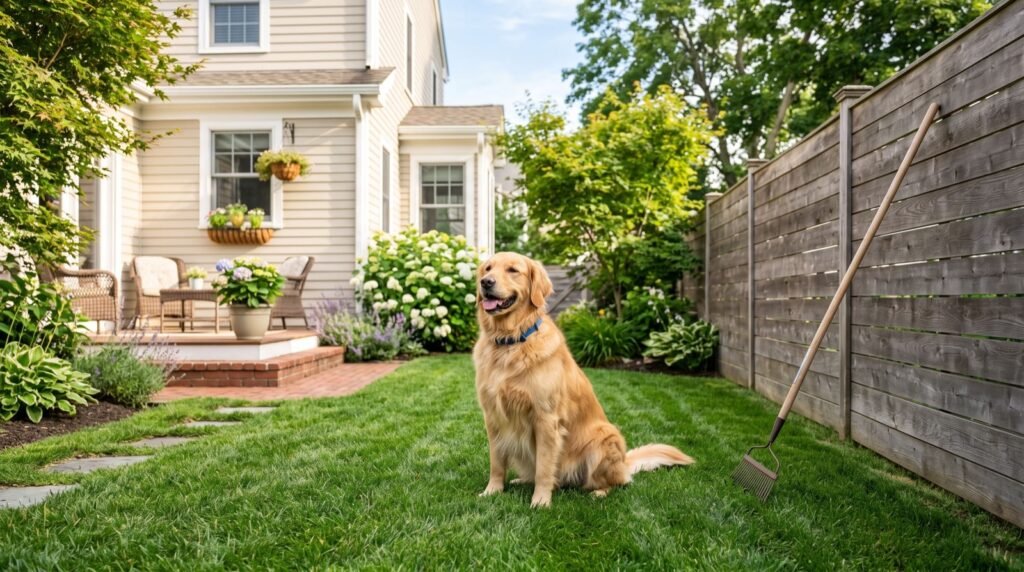
Ask ten homeowners what ruined their grass and most will blame heat, grubs, or a stingy sprinkler. After years of helping people troubleshoot patchy turf, I can tell you the real culprit is usually simpler: dog poop on your lawn. Left sitting, waste scorches grass, feeds weeds, and draws flies, and it does that damage in days, not months.
The encouraging part is that recovery is very doable in 2026, even for busy owners. This guide explains exactly how waste harms turf, walks through seven fixes that actually work, and ends with a 20-minute weekly routine that keeps the whole yard healthy.
How Dog Poop on Your Lawn Kills Grass
Dog waste is loaded with nitrogen and phosphorus. A light dose of nitrogen feeds a lawn, but a concentrated pile overloads one small circle of turf, burning blades and roots underneath. That is why you often see a dead center ringed by taller, darker green grass.
Waste also smothers. A pile blocks sunlight for however long it sits, and the matted grass beneath thins quickly. According to the U.S. Environmental Protection Agency, pet waste is a meaningful source of nutrient pollution too, because rain carries those nutrients and bacteria into storm drains and local streams. Your lawn problem is also a watershed problem.
The 7 Fixes That Actually Work
- Scoop every 24 to 48 hours. Speed beats technique. Most owners start by typing Pooper scooper near me into a search bar, and that is a fine move, just choose a long-handled, rust-resistant model so the chore takes minutes, not motivation.
- Water the spot immediately after pickup. A quick 30-second soak dilutes leftover nitrogen before it concentrates in the soil.
- Rake out dead material. Brown, brittle blades will not green back up. Clear them so seed can reach soil.
- Overseed with a fast fescue or ryegrass blend. These germinate in 7 to 14 days and knit bare patches closed before weeds arrive.
- Train a bathroom zone. A mulch or pea-gravel corner, rewarded consistently for two weeks, concentrates damage where grass never grows.
- Aerate the dog highways. Paw traffic compacts soil along fences. Core aeration each fall lets water and roots move again.
- Mow high, around 3 to 3.5 inches. Taller grass shades soil, holds moisture, and recovers from stress far faster than a scalped lawn.
Why Does Dog Poop Turn Grass Brown?
Think of a fertilizer bag tipped over in one spot. The label rate might be one pound of nitrogen per thousand square feet, but a single pile delivers a massive dose to a six-inch circle. Roots dehydrate, cells rupture, and the patch browns within a week.
Dog size and diet matter more than breed. Large dogs on high-protein food produce waste with more nitrogen, so their spots burn faster and wider. Urine causes similar scorching, but poop adds a second problem urine does not: it physically smothers turf while it breaks down, which can take weeks in dry weather.
Soil type plays a role as well. Sandy soils drain the excess quickly, while heavy clay holds concentrated nutrients against the roots longer, deepening the burn.
Diagnosing the Damage at a Glance
| What you see | Likely cause | Fix | Recovery time |
|---|---|---|---|
| Brown circle with dark green ring | Nitrogen burn from waste or urine | Flush with water, rake, overseed | 2 to 4 weeks |
| Yellow matted patch | Pile sat too long and smothered turf | Remove debris, scratch soil, reseed | 3 to 5 weeks |
| Thin strips along fence | Compaction from pacing | Core aerate, topdress with compost | One season |
| Clusters of flies and weeds | Infrequent pickup | 48-hour scoop schedule | Immediate improvement |
Most of these repairs fit inside a single weekend. If your yard needs a full renovation, hiring help is reasonable. Families already lean on dependable specialists for storage and moving because time has value, and turf work follows the same logic: pros carry equipment you would only rent once.
A Weekly Yard Hygiene Routine That Takes 20 Minutes
Consistency is the whole game. Here is the cadence I recommend to clients with one or two dogs:
- Monday and Thursday: Two five-minute scoop passes, walking a simple grid so nothing hides in shade or tall grass.
- Saturday: Perimeter check along fences and behind sheds, plus a quick hose rinse of any burn-prone spots.
- Monthly: Inspect the bathroom zone, refresh mulch, and reseed any thin edges you catch early.
Keep every supply in one grab-and-go kit so the routine never stalls. A heavy duty tool bag holds the scooper, spare bags, gloves, and a hand rake, and it hangs on a garage hook where you will actually see it.
One original tip from my own yard: mark the week’s piles with golf tees as you spot them from the porch. On scoop day you walk straight to each flag instead of hunting, which cuts the chore nearly in half.
The Hidden Pest Cost of a Dirty Yard
Grass damage is the visible bill; pests are the invisible one. Flies lay eggs directly in waste, and a neglected yard can hatch a new generation every ten days through summer. Those flies do not respect the property line between your lawn and your kitchen door.
Rodents are the surprise offender. Rats will feed on dog waste when easier calories are scarce, and pest control companies routinely list it among the attractants they check first on residential calls. A clean yard removes both the nursery and the buffet.
There is also the neighbor factor. Odor drifts, complaints follow, and in many HOAs a smelly yard is an enforceable violation. Every fix in this article doubles as neighborhood diplomacy.
Frequently Asked Questions
How long does grass take to recover from dog poop damage?
Minor nitrogen burn recovers in two to four weeks once the waste is removed and the area is watered. Fully dead patches need reseeding and typically fill in within five weeks during spring or early fall growing windows.
Is dog poop good fertilizer if I just leave it?
No. Unlike cow manure, dog waste is too concentrated, too acidic in effect, and it can carry parasites like roundworm. It burns turf where it sits and contaminates runoff. Compost from herbivores feeds lawns; carnivore waste does not.
Do lawn treatments like lime fix poop spots?
Lime adjusts soil pH, which is rarely the actual issue. The problem is concentrated nitrogen and smothering. Water, removal, and reseeding fix the spot; save lime for a soil test that proves you need it.
The Bottom Line
Dog poop on your lawn is the most fixable turf problem there is. Scoop on a schedule, water the spots, reseed the casualties, and give your dog a designated corner. Start the two-pass weekly routine this week, and by next month your yard will show the difference in every green square foot.